Non-Surgical Treatment for Spinal Stenosis Pain in Toronto & Vaughan

What is Spinal Stenosis?

Stenosis is the medical term for narrowing. Spinal stenosis occurs when the spinal canal, the channel through which the spinal cord and nerves travel,  becomes narrowed. This narrowing puts pressure on the spinal cord and nerves, causing pain and a range of other symptoms.

The condition most often develops gradually over time, though some people are born with a narrower spinal canal. It is most common in the lumbar spine (lower back), where it is called lumbar spinal stenosis. It can also develop in the neck, where it is known as cervical stenosis.

When the spinal canal narrows, it compresses the spinal cord and nerves that pass through it. This compression is what drives the symptoms of spinal stenosis,  and why effective treatment must focus on relieving that pressure directly.

What are the Symptoms and Causes of Spinal Stenosis?

The symptoms of spinal stenosis vary depending on where the narrowing occurs and how severely it compresses the spinal cord and nerves. Common symptoms of lumbar spinal stenosis include:

  • Pain radiating from the lower back, into the buttock, and down the thigh as far as the toes
  • Numbness, burning, or tingling in the legs or feet
  • Muscle weakness or difficulty controlling the leg
  • Difficulty sitting or standing without pain
  • Pain radiating from the lower back, into the buttock, and down the thigh as far as the toes
  • Numbness, burning, or tingling in the legs or feet
  • Muscle weakness or difficulty controlling the leg
  • Difficulty sitting or standing without pain

Symptoms of cervical spinal stenosis can include:

  • Tingling and numbness in the arms
  • Major body weakness
  • Paralysis in severe cases
  • Tingling and numbness in the arms
  • Significant body weakness
  • Paralysis in severe cases

Other possible symptoms of spinal stenosis include:

  • Deterioration of fine motor skills
  • Gait disturbance
  • Night-time pain or pain when lying down
  • Fever or unexplained weight loss
  • Structural deformity
  • Severe or progressive nerve deficit
  • Pain when lying down
  • Severe or progressive nerve deficit
  • Deterioration of fine motor skills
  • Gait disturbance
  • Night-time pain or pain when lying down
  • Fever or unexplained weight loss
  • Structural deformity
  • Severe or progressive nerve deficit

Other Causes of Spinal Stenosis Beyond Aging:

  • Bulging or herniated discs pushing into the spinal canal
  • Thickening of ligaments
  • Bone spurs that put pressure on nerve roots
  • Breakdown of facet joints
  • Spondylolisthesis (slipped vertebra)
  • Spinal degeneration
  • Cysts on the facet joints
  • Arthritis
  • Spinal instability or trauma
  • Tumors or soft-tissue inflammation
  • Compression fractures, more common in patients with osteoporosis
  • Bulging or herniated discs pushing into the spinal canal
  • Thickening of ligaments
  • Bone spurs that put pressure on nerve roots
  • Breakdown of facet joints
  • Spondylolisthesis (slipped vertebra)
  • Spinal degeneration
  • Cysts on the facet joints
  • Arthritis
  • Spinal instability or trauma
  • Tumors or soft-tissue inflammation
  • Compression fractures, more common in patients with osteoporosis

Why Surgery Isn’t Always the Answer

For many patients diagnosed with spinal stenosis, spinal fusion or other surgical procedures are presented as the main option. But surgery carries significant risks — and permanently altering spinal structures can create new problems over time. Our approach is minimally invasive and targets the root cause: relieving the compression on the spinal cord and nerves without permanently connecting or fusing vertebrae.

Spinal Stenosis Treatment Options

Dr. Ron Nusbaum developed a unique system of care to deliver rapid, non-invasive, and lasting relief from spinal stenosis pain. The High-Performance Healing System™ has succeeded where conventional treatments have failed. It involves three core steps:

Non-Surgical Spinal Decompression

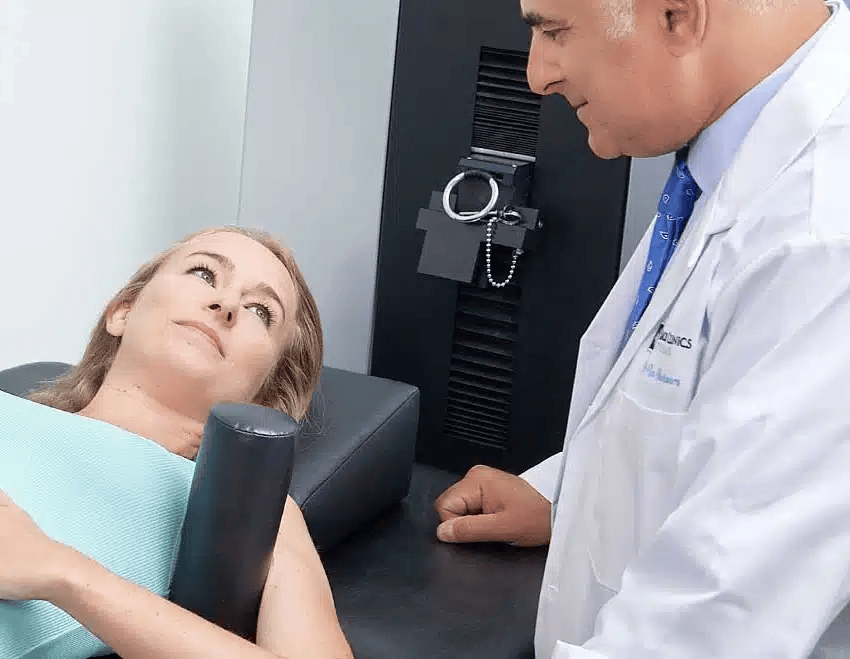
Spinal decompression gently and precisely stretches the spine to widen the spinal canal, relieving the compression on the spinal cord and nerve roots. By restoring disc height and reducing pressure on the structures within the spinal canal, it addresses the physical cause of lumbar spinal stenosis and cervical stenosis directly. Think of it as an outside-in approach to healing.

Class IV Laser Therapy

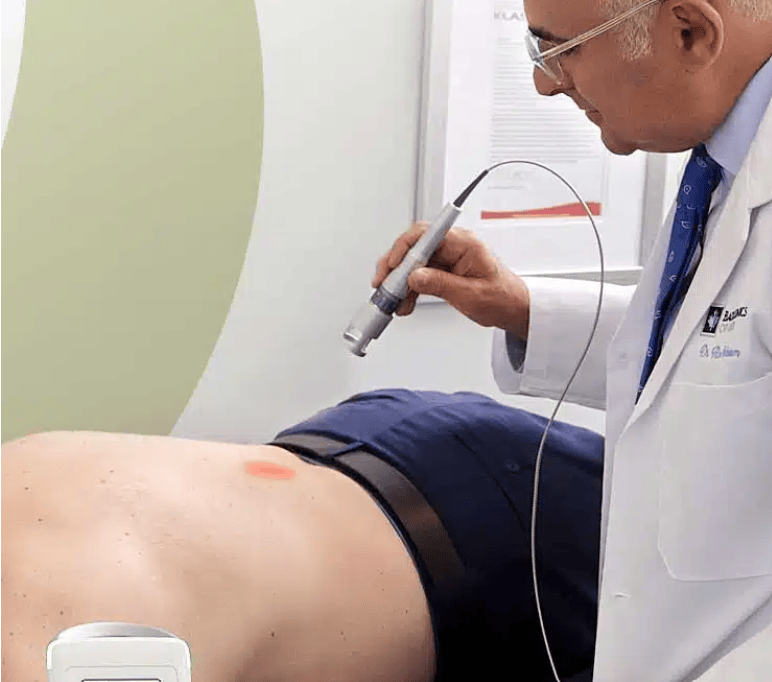
Also called photobiomodulation, this deep-penetrating laser targets the damaged tissue responsible for inflammation and nerve irritation. The laser interacts with cells around the affected spinal cord and nerves to reduce inflammation, promote tissue repair, and accelerate healing. Think of it as an inside-out complement to decompression.

Disc Renewal Plus™

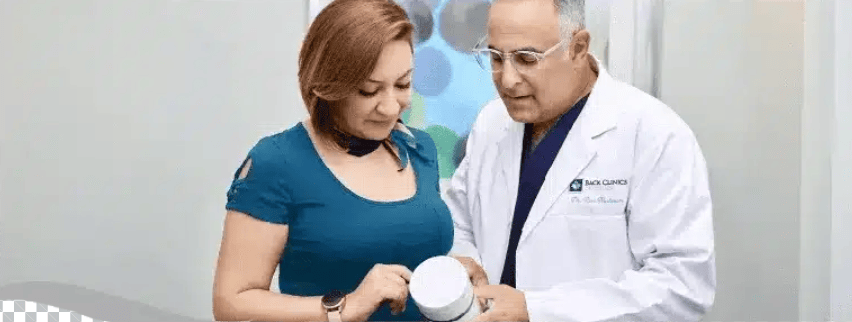
Dr. Nusbaum formulated this all-natural nutritional supplement to reduce pain and inflammation and support the repair of damaged connective tissue. Available exclusively to Back Clinics of Canada patients, it supports spinal stenosis recovery nutritionally, working alongside laser therapy for comprehensive care.

Stenosis Home Exercise

Specific therapeutic exercises can support the management of spinal stenosis symptoms between clinic visits. Dr. Nusbaum provides patients with a guided home exercise program designed to gently mobilize the spine, reduce stiffness, and support the healing achieved through in-clinic treatment — without aggravating the compressed spinal cord and nerves.

Spinal Manipulation

When appropriate, gentle spinal manipulation can help restore alignment and mobility to joints affected by spinal stenosis. By carefully addressing restrictions in the lumbar or cervical spine, manipulation works to reduce nerve root irritation and improve the overall function of the spinal cord and nerves — complementing the decompression and laser steps of the High-Performance Healing System™.

Whatever Your Condition, We Have Your Back

For over 34 years, we’ve been researching, diagnosing, and treating a wide range of chronic back and neck conditions. And since 2013, we’ve changed thousands of lives with our proprietary High-Performance Healing System™.Our clinics serving spinal decompression Toronto and spinal decompression Vaughan patients have helped thousands become pain free after years of chronic back pain and neck pain. Whether you're dealing with degenerative discs, disc herniations, or nerve pain that radiates down your legs or arms, we've likely treated it. Every patient gets a customized treatment plan built around their diagnosis, history, and recovery goals.

Trusted by Patients with Severe Lower Back, Sciatica and Neck Pain

Halim S.

"They had me back up on my feet and pain free within weeks!"

Ron P.

"1 year Spinal Stenosis 100% Better in few weeks!"

Daniel H.

I have been suffering from a bulging disc at L5-S1 pressing on my sciatic nerve.  I had to be accommodated at work; I couldn’t lift things heavier than 20 Lbs.  Gardening became so difficult, I enjoy martial arts and of course I could not do that.  Walking my dog

Eva F.

"Years of Spinal Stenosis - I got my life back again!"

Start Living Pain Free:

Flexible payment options start as low as $146 per month
Most health benefits cover towards the cost of care

FAQs Spinal Stenosis

What are the symptoms of spinal stenosis?

Common symptoms of lumbar stenosis include pain radiating from the lower back, down into the buttock, along the back or side of the thigh, and down as far as the toes. Overall, spinal stenosis can cause pain, numbness, weakness, tingling, and loss of motor control. A hallmark feature is that symptoms often worsen when standing upright or walking, and are temporarily relieved by sitting or leaning forward — a pattern known as neurogenic claudication.

Why does walking become so difficult with spinal stenosis?

When standing upright or walking, the spinal canal naturally narrows slightly, placing additional pressure on already compressed nerve roots. This produces the cramping, heaviness, and leg pain associated with neurogenic claudication — a key symptom of lumbar spinal stenosis. Many patients find they can only walk short distances before needing to stop and rest. One patient, Walter, age 84, described suffering for two years with stenosis where he could hardly walk any distance without stopping to rest — after completing Dr. Nusbaum’s Stenosis program, he was able to walk an hour without pain.

How does non-surgical spinal decompression treat spinal stenosis?

Spinal decompression is a non-invasive procedure that delivers painless, precise, and accurately targeted stretching of the damaged disc, causing a reduction of pain and inflammation that jumpstarts healing of the disc. By creating negative pressure at the specific disc level contributing to the stenosis, decompression restores space within the spinal canal, relieves nerve root compression, and rehydrates the disc — addressing the structural cause of the narrowing rather than simply managing its symptoms.

How does Disc Renewal Plus™ support spinal stenosis treatment?

Disc Renewal Plus™ is an all-natural nutritional supplementation system formulated to support reduction in pain and inflammation and support the healing of damaged connective tissue — the material discs are made of. It has a similar role to play in back pain healing as Class IV laser, but from a nutritional perspective, and is custom formulated by Dr. Nusbaum, available exclusively to patients of Back Clinics of Canada. By providing the building blocks for connective tissue repair, it supports healing at a cellular level that neither decompression nor laser alone can fully address.

How do I find out if I'm a candidate for spinal stenosis treatment at Back Clinics of Canada?

The first step is a complimentary consultation and comprehensive examination with Dr. Nusbaum. This includes a full health history review, orthopedic, neurological, postural and muscular testing, a computerized non-needle EMG assessment, and evaluation of any available MRI, CT, or X-ray imaging. Back Clinics of Canada’s High-Performance Healing System™ is an integrated, multi-pronged system of care that is seeing great results among patients suffering with spinal stenosis and other painful low back and neck conditions. The examination determines whether you are a candidate and allows the team to design a program precisely matched to your condition.